As industries increasingly turn to sustainable solutions, the trend of industrial solar panels gains momentum. Experts predict significant advancements in this field by 2026. "Solar energy is not just a trend; it's the future of our industries," says Dr. Emily Carter, a leading specialist in renewable energy.
Industrial solar panels offer unique advantages. They reduce energy costs and support corporate sustainability goals. In recent years, many companies have adopted solar technology. However, challenges persist. The initial investment can be daunting. Additionally, ensuring optimal energy output requires careful planning and maintenance.
Trends indicate a growth in solar panel efficiency and integration with smart technologies. Businesses must stay informed about these developments. As the landscape evolves, resilience will be key. The future of industrial solar panels looks promising, but ongoing adaptation is essential for success.
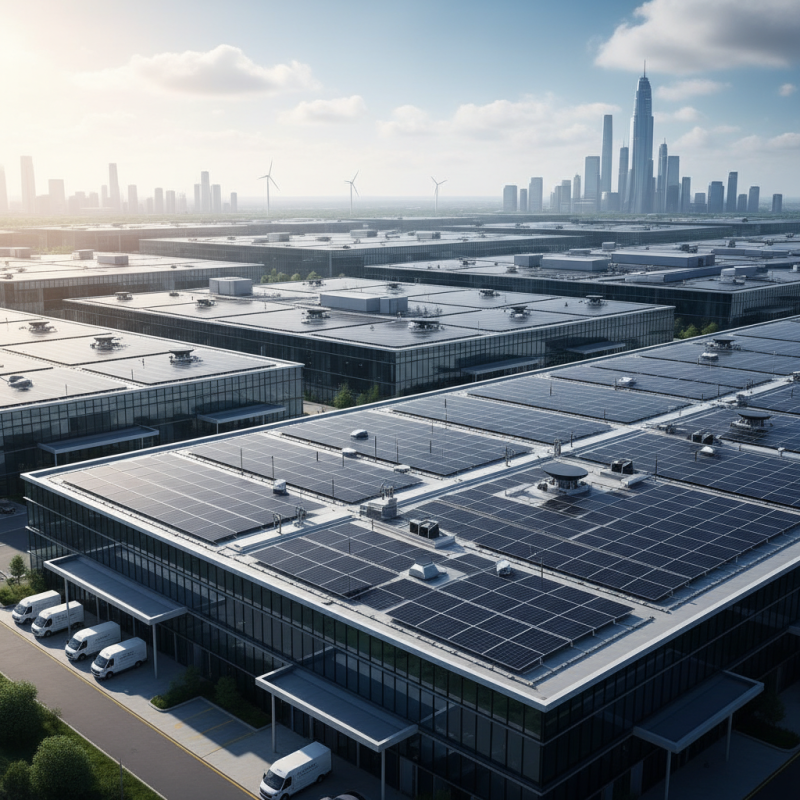
The industrial solar panel sector is experiencing rapid innovation. A recent report from the International Energy Agency (IEA) highlights that by 2026, global solar power capacity could reach over 4,000 gigawatts. This surge drives manufacturers to adopt emerging technologies, focusing on efficiency and sustainability.
One notable trend is the development of bifacial solar panels. These panels can generate energy from both sides, significantly boosting output by 10-20%. Advanced materials like perovskite are also gaining traction. They promise higher efficiency rates and lower production costs. According to a report by Research and Markets, the global perovskite solar cell market is projected to grow at a CAGR of 39.8% from 2022 to 2026.
Another trend is the integration of AI and machine learning in manufacturing processes. These technologies enhance quality control and optimize production efficiency. However, challenges remain. The industry grapples with scaling these technologies while maintaining cost-effectiveness. The balance between innovation and practical application is crucial for sustainable growth. Adapting to these emerging trends could redefine industrial solar energy production within a few years.
| Trend | Description | Impact | Expected Adoption Rate (%) | Key Technology |
|---|---|---|---|---|
| Bifacial Solar Panels | Panels that collect sunlight from both sides for increased efficiency. | Higher energy output and better utilization of space. | 65% | Dual-side light absorption technology |
| Floating Solar Farms | Solar panels installed on bodies of water to save land space. | Reduces evaporation while maximizing solar capture. | 50% | Pontoon and buoy technology |
| Agrovoltaics | Combining agriculture with solar panel installations. | Improves land efficiency and crop yield. | 40% | Solar panel canopies |
| Advanced Recycling Techniques | Innovative methods for recycling solar panel materials. | Supports sustainability and lowers manufacturing costs. | 55% | Chemical and mechanical recycling |
| Building-Integrated Photovoltaics (BIPV) | Integrating solar cells into building materials like windows and roofs. | Aesthetically pleasing and space-saving solar solutions. | 45% | Transparent solar technology |
The efficiency of solar panels is set to experience significant enhancements in 2026. This evolution stems from advancements in materials and technology. For instance, the use of bifacial solar cells allows panels to capture sunlight from both sides. This design maximizes energy production, especially in reflective environments, such as snowy regions.
Incorporating energy storage systems alongside solar panels is also a growing trend. These systems ensure that excess energy generated during sunny days can be stored for later use. This integration not only improves overall efficiency but also optimizes the energy supply, making solar systems more adaptable to consumers' needs.
Tips: When selecting solar panels, consider their efficiency ratings. Research indicates that higher efficiency panels can lead to better long-term savings. Additionally, always evaluate your specific energy needs before installation. Not every home benefits equally from solar technology. Frequent analysis of your system's performance can help identify any areas needing improvement or adjustments.
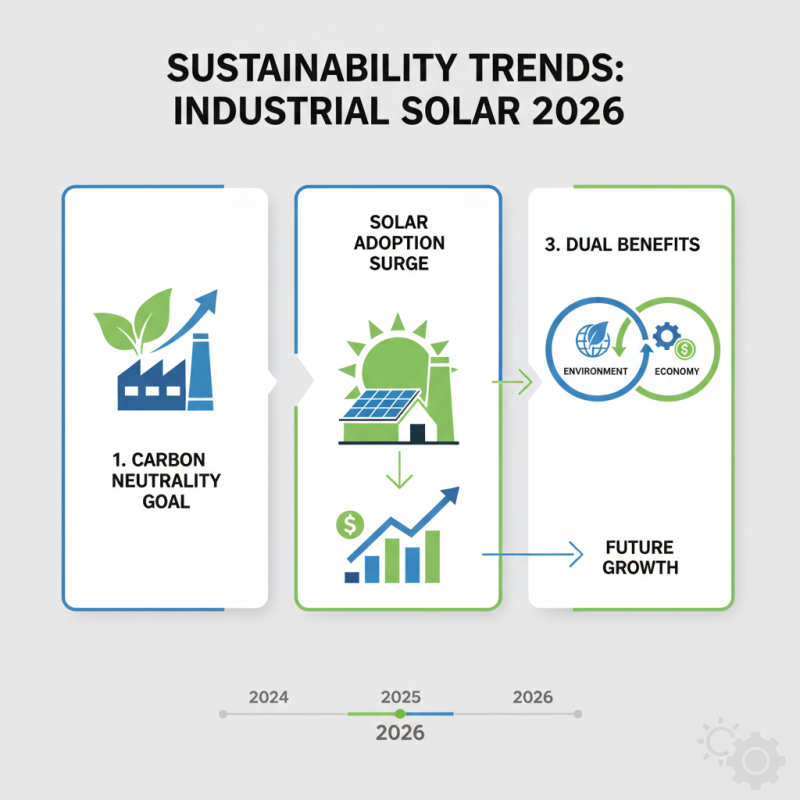
The sustainability trends shaping the industrial solar solutions for 2026 are notable. As industries aim for carbon neutrality, solar energy becomes a core focus. Companies are identifying ways to implement solar panels in their operations. This shift is driven by environmental concerns and economic benefits.
Integration of energy storage systems is essential. These systems allow excessive energy production to be stored and used during peak demand. This practice enhances reliability. Another trend is the adoption of solar tracking systems. These systems increase panel efficiency by following the sun's path, maximizing energy capture.
Tips: Consider regular audits of solar systems. This ensures optimal performance and identifies areas for improvement. Investing in employee training on solar technology can also enhance understanding and implementation. The path to sustainability involves ongoing learning. Not all solutions will fit every situation, and adapting to specific needs is crucial. Reflect on what works and what doesn't. Continuous improvement is the goal.
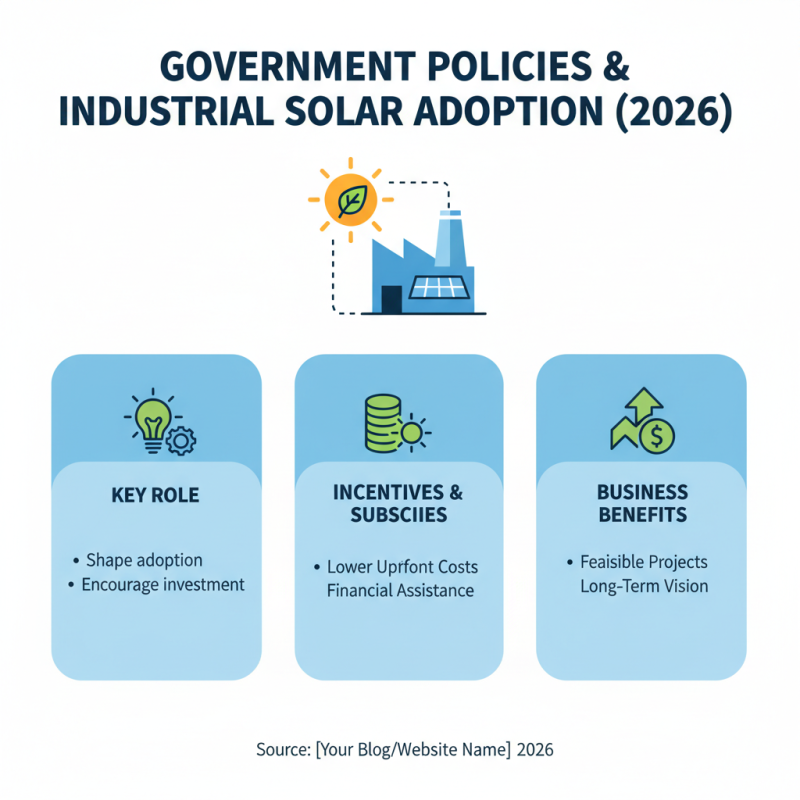
Government policies play a crucial role in shaping industrial solar adoption as we approach 2026. Various incentives and subsidies are designed to encourage businesses to invest in renewable energy. These policies can lower the upfront costs associated with solar installation. For many companies, this financial help can turn a long-term vision into a feasible project.
However, not all policies are beneficial for every industrial sector. The regulations may vary significantly across regions, which can create confusion. Some businesses could struggle to meet specific compliance standards. Furthermore, the shifting political landscape can lead to uncertainties in policy continuity. Companies need to stay informed about how these changes might impact their solar initiatives.
Active engagement with local policy frameworks is essential for businesses. They should assess their unique circumstances and strategize accordingly. Investing in expert consultations can provide tailored insights. This proactive approach ensures that companies maximize the benefits of favorable policies. As the industrial sector moves forward, being adaptable to policy changes will be vital in harnessing solar energy effectively.
The industrial solar panel market is projected to see significant growth in the coming years. Experts predict an increasing investment in solar technology. Companies are realizing the long-term benefits of solar energy. Sustainability is at the forefront of corporate strategies. As global demand for cleaner energy grows, investment is expected to follow.
Tapping into this market requires attention to the latest trends. Look for advancements in panel efficiency. Enhanced energy capture can lead to higher returns. Moreover, innovations in energy storage are crucial. This allows businesses to store excess energy for future use. Implementation might not be as straightforward as anticipated. Companies need to evaluate their specific energy needs carefully.
Collaboration will be essential. Businesses should consider partnerships with technology providers. Such alliances can bring expertise and reduce risks. Risk assessment will be critical while making investments. Understanding potential downsides is essential. As the market evolves, staying informed will be key to making sound investment decisions.
This bar chart illustrates the anticipated growth in global industrial solar panel capacity from 2022 to 2026. Significant increases are expected as investment trends shift more towards renewable energy solutions, with capacity projected to reach 90 GW by 2026.