Unirac

How to Buy Solar Panels in the USA in 2026

Buying solar panels in the USA in 2026 requires more than comparing advertised wattage. Your roof, electricity use, local prices, financing terms, and utility rules all affect the real value. A panel that performs well in Arizona may deliver less energy in New England. Small details matter.

The Solar Energy Industries Association and Wood Mackenzie reported that solar supplied more than half of new U.S. electric-generating capacity in 2023, with approximately 32.4 gigawatts installed. Their Solar Market Insight reports show a rapidly expanding market, but growth does not guarantee a good household purchase. The International Energy Agency also identifies solar photovoltaics as a major driver of global renewable capacity expansion. These figures explain the opportunity. They do not choose the right system for your home.

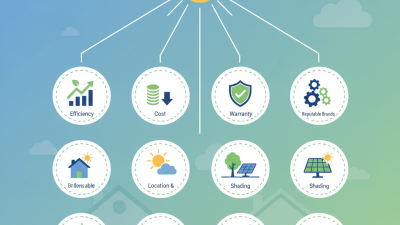
This guide explains how to evaluate solar panels USA suppliers, installers, warranties, and energy estimates in 2026. It also considers federal incentives, state programs, net-metering policies, and utility-specific limits. Incentive rules can change. Verify current information through IRS guidance, your state energy office, and your electricity provider. NREL’s residential solar research highlights the importance of shading, roof orientation, system losses, and local solar resources. Ask installers to show these assumptions clearly.

Do not focus only on the lowest quote. Review the equipment datasheet, degradation rate, labor coverage, battery terms, and installer credentials. Get multiple written proposals. Compare them carefully.

The process is not perfectly predictable. Electricity prices may change, permitting can take longer than expected, and projected savings are estimates. A careful buyer accepts that uncertainty, documents every assumption, and chooses a system that fits both the roof and the household budget.

How to Buy Solar Panels in the USA in 2026

Define Your Home’s Solar Energy Needs and Buying Goals

Before buying solar panels in the USA in 2026, define what your home must achieve. The U.S. Energy Information Administration reports that average residential electricity use is roughly 10,800 kilowatt-hours annually. However, your household may differ. Review twelve months of utility bills, not one convenient bill. Mark seasonal peaks, air-conditioning use, and planned electric vehicle charging.

Your buying goal should be specific. A lower bill requires a different system from whole-home backup. For example, decide whether you want to offset 50%, 80%, or nearly 100% of annual consumption. The National Renewable Energy Laboratory’s PVWatts tool can estimate production using location, roof direction, tilt, and system losses. Shade from one nearby tree can matter. Do not trust a sales estimate without checking these inputs.

Think beyond today’s load. A heat pump, induction range, pool pump, or home office may increase future demand. The U.S. Department of Energy notes that solar output changes with weather, orientation, and local conditions. Battery storage can support selected circuits, but it usually adds cost and maintenance. Your roof age matters too. Replacing an aging roof later may require removing the array, which is an expense many buyers overlook.

Write down your target, budget, backup needs, and acceptable payback period. Then compare production estimates with actual bills. The estimate might be wrong. That is precisely why careful checking matters.

Compare Solar Panel Types, System Sizes, and Key Specifications

Buying solar panels in the USA in 2026 starts with the roof, not the sales brochure.
Monocrystalline panels usually deliver higher efficiency in limited space. Thin-film modules can perform better on some large, low-slope surfaces, but they often need more area. The Fraunhofer Photovoltaics Report 2024 places leading commercial crystalline-silicon module efficiencies above 23 percent. Real-world output still depends on shade, temperature, orientation, and wiring losses.

System size should follow annual electricity use and usable roof area.
The Berkeley Lab Tracking the Sun report found that 2023 residential installations commonly centered near 7.4 kilowatts, though household demand varies widely. A home using 900 kilowatt-hours monthly may need roughly 7 to 9 kilowatts in many regions. This is only a starting estimate. Local sunlight changes the answer.

Check power tolerance, temperature coefficient, degradation rate, inverter compatibility, and product warranty terms.
Higher wattage is not automatically better. A larger panel may waste roof space around vents or dormers. The National Renewable Energy Laboratory’s 2024 cost benchmarks show that system prices include much more than modules, including labor, permitting, and electrical equipment. I would compare production estimates using conservative shading assumptions. Optimistic forecasts look attractive. They can age badly.

Calculate Installation Costs, Incentives, Financing, and Long-Term Savings

Buying solar in the United States in 2026 starts with a site-specific estimate, not a website headline. An installer should review roof age, shading, orientation, electrical capacity, local permits, and annual electricity use. Ask for a written design showing panel count, expected production, equipment warranties, labor, and total installed price. A practical example helps. An 8-kilowatt system might suit a home using 10,000 kilowatt-hours yearly, but shade can change that estimate. Compare price per watt, then inspect the assumptions behind it.

Installation costs vary by roof complexity, region, battery storage, upgrades, and local labor rates. Request separate prices for the system, electrical work, permits, monitoring, and battery options. Incentives may include federal, state, utility, or property-tax programs, but eligibility and deadlines can change. Confirm current rules through government or utility sources before signing. A tax credit is not an instant discount, and its value depends on your tax situation. A qualified tax professional can check that detail.

Financing deserves more scrutiny than the monthly payment. Compare cash price, loan amount, interest rate, term, dealer fees, prepayment rules, and total repayment. A low payment may hide a longer term. Estimate long-term savings using expected annual production, utility rate changes, maintenance, and inverter replacement. Divide net cost by annual savings for a simple payback estimate, then test conservative assumptions. My first spreadsheet was too optimistic because it ignored winter production and future roof repairs. Leave room for uncertainty. Also compare battery savings separately; backup value may matter even when payback looks weaker.

Evaluate Solar Installers, Warranties, Permits, and Contract Terms

How to Buy Solar Panels in the USA in 2026

Choosing an installer requires more than comparing prices. Check state licensing, local registration, insurance, and recent projects near your home. Ask who performs the electrical work and whether subcontractors are used. A reliable installer should explain roof condition, shading, panel placement, battery options, and expected annual production. Request references, but inspect the details yourself. A polished proposal can still hide weak assumptions.

Review every warranty separately. Product warranties cover equipment defects, while workmanship warranties address installation problems. Performance warranties often promise gradual output levels, not perfect production every year. Ask who handles claims, how long response times usually take, and whether labor or removal costs are excluded. Confirm permit responsibility, utility approval, inspections, and the expected installation schedule. The contract should clearly state system ownership, payment milestones, cancellation rights, maintenance duties, roof repairs, and what happens if the project is delayed. Read the financing terms carefully. A low monthly payment may conceal a higher total cost.

Tips: Compare at least three written proposals. Mark every unclear sentence. Ask for the production model and its assumptions. Do not rely on verbal promises. I would rather accept a modest forecast supported by shade analysis than trust an impressive estimate. That judgment can be uncomfortable, but solar decisions deserve cautious review. Permissions and local rules can change, so verify them with the relevant authority before signing.

How to Buy Solar Panels in the USA in 2026: Evaluate Solar Installers, Warranties, Permits, and Contract Terms

Evaluation Dimension What to Check Typical U.S. Residential Benchmark Questions to Ask Before Signing Warning Signs
System Size Annual electricity use, roof area, shading, roof orientation, local solar resource, and future electricity needs. Many homes use approximately 5–15 kW, but the correct size depends on the household’s electricity consumption and utility rules. What annual production is guaranteed or estimated? How was shading calculated? Does the design account for an electric vehicle, heat pump, or future load? A proposal uses only roof size or promises complete bill elimination without reviewing historical utility usage.
Panel Output Panel rated power, efficiency, temperature coefficient, degradation rate, and performance under partial shade. Current residential panels commonly fall within roughly 350–500 watts per panel, with module efficiency often around 19%–23%. What is the expected first-year production? What annual degradation rate is used in the financial model? Only the panel wattage is provided, with no system-level production estimate or assumptions.
Installer Credentials State or local licensing, electrical qualifications, insurance, required registrations, workmanship history, and complaint resolution process. Licensing and permit requirements vary by state, county, and municipality; the installer should be legally qualified for the project location. Who holds the electrical and contractor licenses? Who will perform the work? Are general liability and workers’ compensation insurance current? The salesperson cannot identify the licensed contractor or refuses to provide insurance and license details.
Installer Experience Comparable completed projects, local experience, subcontractor use, installation quality controls, and post-installation service. Review several recent projects with similar roof types, system sizes, and local permitting conditions. How many local systems were completed recently? Are subcontractors used, and who is responsible for their work? Pressure to sign immediately, unverifiable project references, or unclear responsibility after installation.
Panel Warranty Product defects, material coverage, performance guarantee, degradation schedule, claim process, and transferability. Residential panels commonly include about 10–25 years of product coverage and approximately 25–30 years of performance coverage. Is the warranty backed by the manufacturer or the installer? Who pays labor, shipping, removal, and reinstallation if a panel fails? The proposal lists only a long performance period but omits product coverage and labor responsibility.
Inverter Warranty Coverage period, replacement terms, labor charges, monitoring hardware, and whether an extended warranty is included. Inverter coverage is often shorter than panel coverage; approximately 10–15 years is common, with longer terms sometimes available. What happens if the inverter fails after the standard term? Is labor included? Who monitors and diagnoses faults? The contract does not identify the inverter warranty or assigns all service costs to the homeowner.
Workmanship Warranty Roof penetrations, mounting, wiring, water intrusion, installation defects, and service response time. Workmanship coverage varies widely; a written term of approximately 5–15 years is commonly offered in residential proposals. Does coverage include roof leaks and consequential damage? What response time applies to urgent service requests? “Lifetime workmanship” is advertised without a defined term, exclusions, claim procedure, or responsible legal entity.
Roof Condition Roof age, remaining useful life, structural capacity, roof material, penetrations, and reroofing requirements. If a roof may need replacement during the solar system’s life, reroofing before installation can reduce future removal and reinstallation costs. Was the roof inspected by a qualified professional? Who pays for panel removal if reroofing is needed? The installer will not document roof condition or installs on a roof near the end of its expected service life.
Permits and Inspections Building, electrical, structural, fire, utility interconnection, and local inspection requirements. The homeowner normally needs local approval and utility permission before the system can operate; timelines vary from several weeks to several months. Which permits are included? Who submits documents, schedules inspections, and corrects failed inspections? The contract says the homeowner is responsible for permits even though the installer controls design and construction.
Utility Interconnection Application, engineering review, meter replacement, permission to operate, export limits, and compensation for excess generation. Interconnection rules and export compensation are utility- and location-specific; approval is required before grid-connected operation. What is the current export rate or credit structure? Can the utility limit system size or exports? Savings projections assume a specific credit rate without identifying the governing utility tariff or its expiration date.
Total Installed Price Equipment, labor, design, permits, inspection fees, interconnection, roof work, electrical upgrades, and taxes. Recent U.S. residential solar pricing is commonly discussed in dollars per watt, but local labor, roof complexity, financing, and add-ons can materially change the final price. What is the total cash price before financing? Which costs are excluded? Are batteries, main-panel upgrades, or trenching included? A low headline price excludes required electrical work, permitting, storage, or site-specific costs.
Federal Tax Credit Eligibility, placed-in-service timing, tax liability, transfer rules, and interaction with other incentives. Tax incentives are controlled by federal law and may change; eligibility depends on the project, installation date, and the taxpayer’s circumstances. Is the quoted savings amount a tax credit, a deduction, or a utility incentive? Should a tax professional verify eligibility? The installer guarantees a tax benefit without reviewing the homeowner’s tax situation or applicable law.
Cash Purchase Upfront price, payment schedule, ownership, warranties, maintenance, and expected payback. The homeowner owns the system and generally receives the direct benefits of production, incentives, and future resale value, subject to applicable rules. What deposit is required? Is the final payment due after inspection and permission to operate? Most of the balance is due before installation, inspection, or correction of deficiencies.
Solar Loan Interest rate, annual percentage rate, term, dealer fees, prepayment terms, secured collateral, and payment step-ups. Longer loan terms can lower monthly payments but increase total repayment; compare the total amount paid, not only the advertised payment. What is the cash price versus financed price? Is there a promotional payment period or scheduled payment increase? The contract emphasizes a low monthly payment while hiding fees, deferred interest, or a higher financed principal.
Lease or Power Purchase Agreement Ownership, monthly payment, annual escalator, production guarantee, maintenance, transfer upon home sale, and buyout terms. The provider usually owns the equipment; the homeowner pays for equipment use or generated electricity under a multi-year agreement. What is the payment escalator? Who receives incentives? What happens if the home is sold or the system underperforms? Transfer, buyout, roof-removal, and early-termination terms are vague or require buyer approval that may reduce marketability.
Production Guarantee Guaranteed annual kilowatt-hours, measurement method, weather exclusions, compensation, and claim deadline. A production estimate is not the same as a guarantee; any guarantee should specify annual output and the remedy for shortfalls. How is production measured? What payment or service is provided if the guaranteed output is missed? The proposal guarantees savings but not energy production, and the assumptions are not included in the contract.
Contract Cancellation Cooling-off rights, cancellation window, deposit refund rules, change orders, financing cancellation, and start-of-work definition. Cancellation rights depend on state law and contract type; the written agreement should clearly state deadlines and procedures. Can the agreement be cancelled before permitting or installation? What costs are retained after cancellation? Blanket statements such as “no cancellation under any circumstances” appear without explaining applicable legal rights.
Change Orders Price changes caused by roof repairs, electrical upgrades, structural work, trenching, or permit requirements. Additional work should require written homeowner approval before charges are incurred. What conditions trigger a change order? Can the homeowner reject the change without penalty? The installer may add costs verbally or begin extra work without a signed authorization.
Monitoring and Maintenance Monitoring access, alerts, software ownership, cleaning expectations, vegetation control, and service obligations. Grid-connected systems generally require little routine maintenance, but monitoring is important for detecting production or equipment faults. Who receives monitoring alerts? Is internet service required? Are repairs and truck rolls included? The homeowner cannot access system data or is charged for ordinary warranty diagnosis.
Home Sale and Transfer System ownership, lien or financing payoff, contract assumption, title requirements, and documentation for buyers. Owned systems are usually transferred with the property, while third-party agreements may require buyer qualification or payoff. Can the agreement transfer automatically? Is there a payoff amount or transfer fee? Are UCC filings or other security interests used? The contract provides no clear process for selling the home before the agreement ends.

Important: Benchmarks are general U.S. residential ranges and are not guarantees. Actual requirements, incentives, utility rates, permitting timelines, warranty terms, and contract rights vary by state, locality, utility, property, and project date.

Verify current requirements with the local permitting authority, serving utility, installer, lender, and a qualified tax or legal professional before signing.

Complete the Purchase, Installation, Inspection, and System Activation

Buying starts before the contract. Request a roof assessment, shading analysis, production estimate, and utility-bill review. Compare equipment specifications, labor costs, payment terms, and cancellation conditions. Lawrence Berkeley National Laboratory’s Tracking the Sun 2024 report found a median residential solar price near $3.15 per watt in 2023. The cheapest quote can be wrong. I would question my first estimate, especially when it assumes perfect sunlight and no roof repairs.

Before paying a deposit Confirm the installer’s licensing, insurance, and local permit responsibilities. Ask who submits interconnection paperwork to the utility. Require a written schedule for permits, delivery, installation, inspection, and activation. The agreement should identify expected annual production and remedies for major shortfalls. Keep every document. Small omissions become expensive delays.

Installation should include roof protection, clear conduit routing, labeled disconnects, and safe equipment access. Photograph the completed work before inspection. The local authority will check structural, electrical, and code requirements, while the utility may require a separate approval. Do not activate the system before authorization. After approval, confirm the meter change, monitoring connection, emergency shutdown instructions, and first production reading. The SEIA and Wood Mackenzie 2025 U.S. Solar Industry Insight Report recorded nearly 50 gigawatts of new U.S. solar capacity in 2024, but every household still faces different permitting and grid conditions. A missed document can delay the switch.