How to Choose the Best Solar Equipment for Your Home?
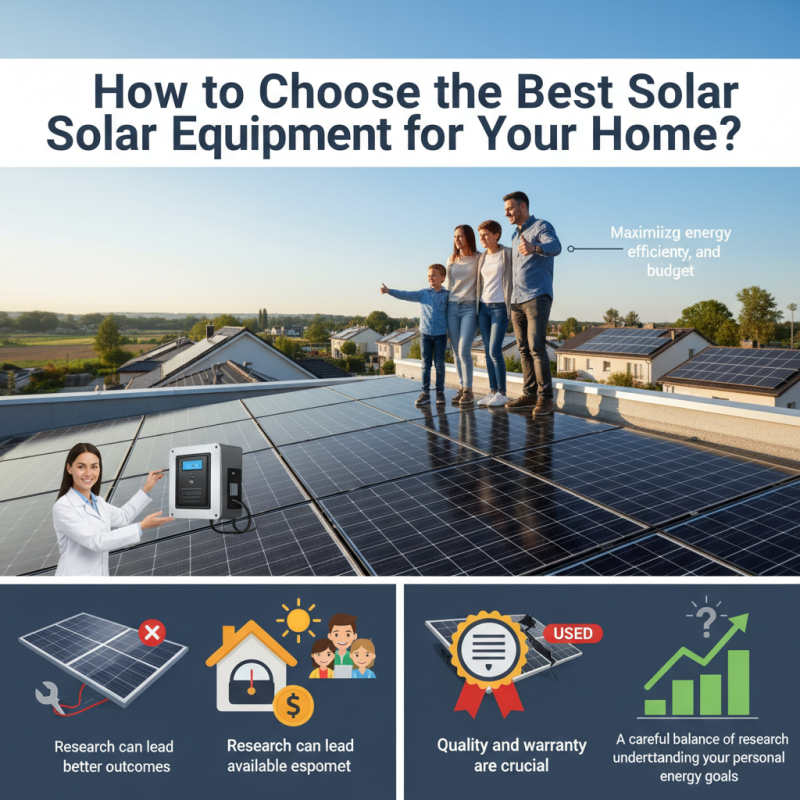
Choosing the best solar equipment for your home can be daunting. There are various options available, and each has its own advantages. Renowned solar energy expert Dr. Sarah Reynolds states, "Selecting the right solar equipment is vital for maximizing energy efficiency." This highlights the importance of making an informed choice.
When considering solar equipment, focus on your specific needs. Assess your energy consumption, available space, and budget. These factors greatly influence the type of solar panels and inverters you should consider. It's common to feel overwhelmed by technical specifications and brands. However, taking the time to research can lead to better outcomes.
Experts suggest looking beyond price. Quality and warranty are crucial elements. Often, cheaper equipment can lead to failures and additional costs later. Pre-owned solar equipment might seem appealing but could lack reliability. Be wary of hidden costs that may arise after installation. In the end, choosing the right solar equipment is a careful balance of research and understanding your personal energy goals.
Understanding Your Energy Needs for Solar Equipment
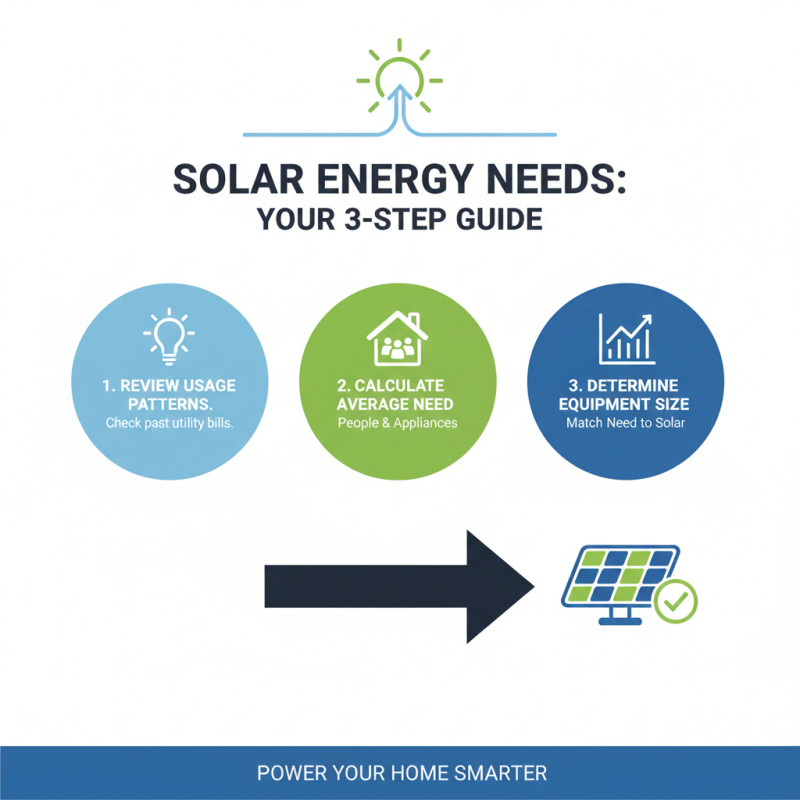
Understanding your energy needs is vital when choosing solar equipment. Start by reviewing your energy consumption patterns. Look at past utility bills to find your average usage. This data illuminates how much energy you really need. Consider factors like the number of people in your home and the types of appliances you use daily.
Next, think about your home's orientation and sunlight exposure. Some homes benefit from sunlight all day, while others may have shaded areas. This directly impacts the efficiency of solar panels. You might have to adjust your expectations based on these specifics. Mapping out the roof space can also help identify potential challenges. Don't overlook potential obstructions like trees or neighboring buildings.
The size of the solar system you need must be tailored to your findings. A calculation can help determine how many solar panels are necessary. You might realize the initial investment could be higher than expected. Reflecting on these details can guide your choices. Balancing needs versus budget is crucial in making a wise decision.
Evaluating Different Types of Solar Panels and Their Efficiency
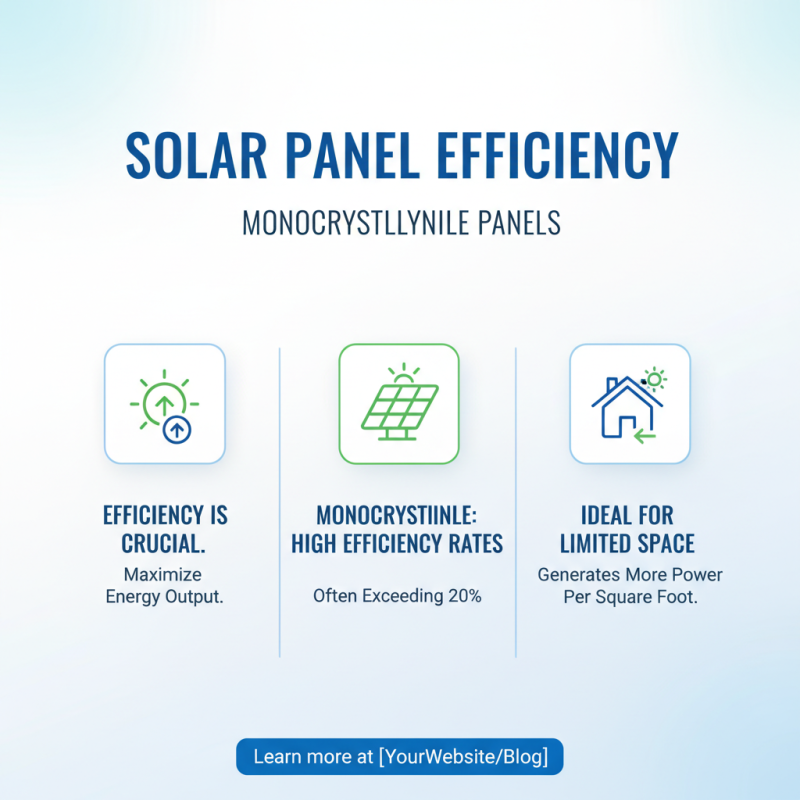
When considering solar panels, efficiency is crucial. Different types of solar panels exist, each with unique characteristics. Monocrystalline panels are known for high efficiency rates, often exceeding 20%. These panels work well in limited space, maximizing energy output.
Polycrystalline panels are another option. They are less efficient, typically around 15-17%. However, they are often cheaper and work effectively in wide-open areas. Choosing between these types depends on your budget and space availability.
Thin-film panels offer versatility and flexibility. Their efficiency can vary significantly, sometimes as low as 10%. They are lightweight and can be installed on various surfaces. Yet, their lower efficiency might require more installation space. It's important to weigh these options carefully, assessing your home's needs and potential energy savings.
Assessing Solar Inverters: Choosing the Right Type for Your System
When selecting solar inverters, several factors come into play. It’s essential to understand the different inverter types available. There are string inverters, microinverters, and power optimizers. Each type has its pros and cons, influencing efficiency and cost.
String inverters are common and relatively affordable. They connect multiple panels in a series. However, their performance can suffer if one panel is shaded. Microinverters operate at the individual panel level. This can maximize output but may require a higher initial investment. Think about your system's layout. Will shading be a problem for some panels?
Consider the warranty and lifespan of your inverter. Not all inverters are created equal. Some offer longer warranties than others. Reflect on how long you plan to stay in your home. A reliable inverter should last over a decade. Be prepared for possible repairs or replacements. Think about installation costs, too. Improper installation can lead to inefficiency. It’s crucial to weigh these aspects carefully for your solar investment.
Solar Inverter Efficiency Comparison
Considering Battery Storage Solutions for Solar Energy
When considering solar energy for your home, battery storage solutions are crucial. Many homeowners aim to maximize their solar investment. According to the International Energy Agency, energy storage systems can enhance solar efficiency by up to 30%. This means that during peak sunlight hours, excess energy produced can be stored, rather than wasted.
However, choosing the right battery is complex. Not all systems are designed equally. Some may last only five years, while others can go beyond a decade. The most popular options include lithium-ion batteries and lead-acid batteries. Lithium-ion systems, though more expensive, have higher efficiency rates and longer life spans. In contrast, lead-acid batteries have lower upfront costs but may require frequent replacements.
It's also important to think about energy needs. Not every home consumes power the same way. Some households may find that a smaller battery can meet their needs, while others might need a larger setup. Additionally, if your home has fluctuating energy demands, you might feel pressured to invest in a more substantial system. This can lead to potential overspending. Finding a balance between cost and efficiency is key.
Exploring Installation Options and Local Regulations for Solar Equipment
When considering solar equipment for home installation, it's crucial to understand local regulations. Each region has different rules that can affect solar panel installation. For instance, in the U.S., many states offer incentives that can reduce costs significantly. According to a recent study by the Solar Energy Industries Association, almost 90% of homeowners saw a return on investment in just five to seven years.
Local regulations may also dictate what equipment is permissible. Some areas require specific permits before installation. These rules can initially seem overwhelming. However, they exist to ensure safety and quality in installations. Homeowners often find themselves confused, as the paperwork may be extensive and the timelines unpredictable.
It's essential to consult local authorities or professionals before proceeding. Gathering information from community boards can help clarify these regulations. Unclear guidelines may lead to costly mistakes or delays. According to a survey, nearly 30% of homeowners faced unexpected issues during their installations due to lack of preparation. Therefore, thorough research can save time and resources in the long run.
How to Choose the Best Solar Equipment for Your Home?
| Equipment Type |
Efficiency (%) |
Average Cost ($) |
Warranty (Years) |
Installation Type |
Local Regulations |
| Monocrystalline Solar Panels |
15-22 |
1,200 |
25 |
Roof Mount |
Permits required |
| Polycrystalline Solar Panels |
13-16 |
1,000 |
25 |
Roof Mount |
Permits required |
| Thin-Film Solar Panels |
10-12 |
800 |
10 |
Flexible Mount |
Less regulation |
| Solar Inverters |
95-98 |
1,500 |
10 |
Centralized/String |
Permits required |
| Battery Storage Systems |
N/A |
6,000 |
10 |
Standalone |
Regulations vary by state |