How to Choose the Best Solar System Installation for Your Home?
Choosing the right solar system installation for your home can be a daunting task. According to John Smith, a leading expert in the solar industry, “The best installation is one that fits your personal energy needs.” His insight emphasizes the significance of personalized choices in solar solutions.
Homeowners face numerous factors when selecting solar system installations. Budget, energy requirements, and roof space all play crucial roles. It's essential to evaluate potential installers carefully. Not every provider offers the same quality. Some may rush the process or fail to provide comprehensive maintenance options. It's important to reflect on these aspects before making a decision.
Investing in solar power is an impactful step. However, choosing poorly can lead to regrets. A thorough assessment of your options will save time and money. Make sure the installer has a solid reputation and positive reviews. This choice will not only affect your finances but also your environmental footprint. A thoughtful decision now pays off later.

Understanding Your Energy Needs and Consumption Patterns
When selecting the best solar system for your home, understanding your energy needs is crucial. Start by reviewing your utility bills. Look at the monthly consumption patterns. Are there seasonal changes? Take note of peak usage times. This insight provides a clearer picture of your household's needs.
Next, think about your lifestyle. Do you work from home? Maybe you have an electric vehicle. All these factors affect energy consumption. It might be helpful to identify gadgets that consume more energy. Small adjustments, like switching to LED bulbs, can also lead to better efficiency. Consider conducting an energy audit. It is a worthwhile step, often revealing surprising results.
Lastly, reflect on your long-term goals. Are you planning to expand your family or make larger purchases? Energy needs can change. A system that fits your current needs may not suffice in the future. It’s essential to choose a flexible solar solution. You want to avoid a situation where your system cannot accommodate increased demands later on.
Energy Consumption Patterns for a Solar System Installation
This chart represents the average monthly energy consumption patterns in kilowatt-hours (kWh) for a typical household throughout the year. Understanding your energy usage can help in choosing the best solar system installation for your home.
Evaluating Different Types of Solar Panel Technologies and Their Efficiency
When considering solar panel technologies, efficiency is key. Some panels convert sunlight into electricity better than others.
Monocrystalline panels are often seen as highly efficient. They can achieve over 20% efficiency under ideal conditions.
This means they produce more power with less space. However, they often come at a higher cost.
Polycrystalline panels are a budget-friendly option. They are less efficient, usually around
15-17%. This can be a drawback if you have limited roof space. Yet, many homeowners find that the price difference makes them attractive.
The trade-off between cost and efficiency is a common dilemma.
Thin-film technology offers flexibility in installation. It has a lower efficiency rate but is lighter and can be integrated into various surfaces.
Consider your local climate. In areas with less sunlight, investing in higher efficiency panels might be wise. Each technology has its pros and cons. Reflect on your needs before making a decision.
Assessing Local Solar Incentives, Rebates, and Financing Options
When choosing a solar system for your home, understanding local incentives and financing options is crucial. Many states offer solar rebates, significantly reducing installation costs. For example, California's Solar Incentive Program can provide homeowners with up to $5,000. Check your local utility's website to find applicable programs in your area.
Financing options can make solar energy more accessible. A recent report indicates that nearly 70% of homeowners opt for solar loans. These loans can often cover upfront costs and allow homeowners to pay over time while benefiting from immediate energy savings. However, be wary of high-interest rates. A small change in interest can lead to substantial differences in total payments.
Tips: Always assess your credit score before applying for loans. A higher score often leads to better rates. Research different lenders. Compare terms before committing.
Another important aspect is understanding tax credits. Federal tax incentives can cover up to 26% of solar installation costs. However, these incentives may decrease over time. Do not rely solely on these credits as they change frequently. Being informed allows better long-term financial planning.
Estimating Return on Investment and Energy Savings Over Time
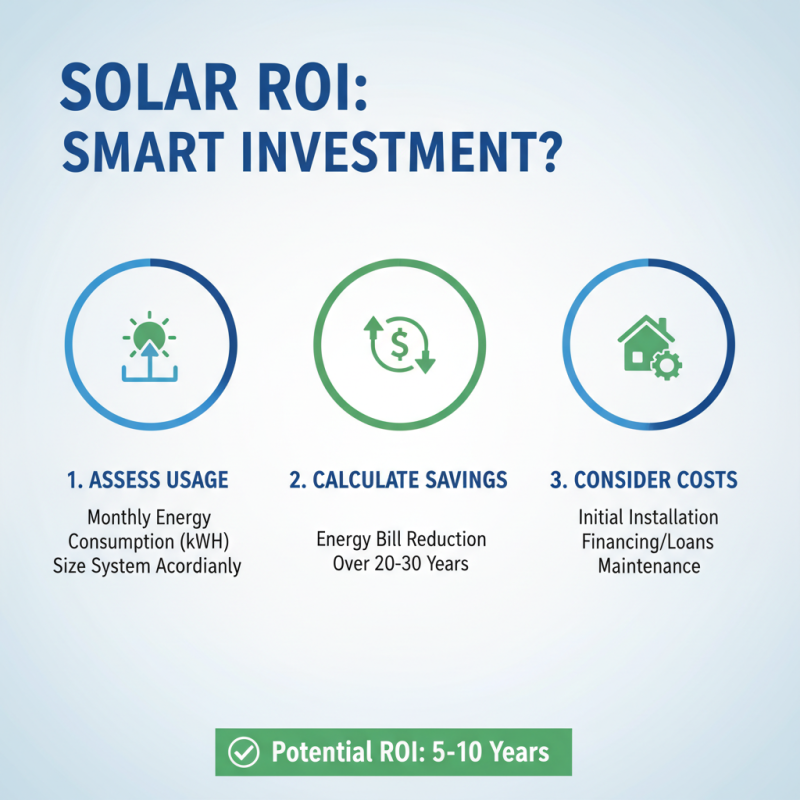
When considering a solar system installation, it's essential to estimate your potential return on investment (ROI). Analyze how much energy you consume monthly. This figure will help you calculate your savings over time. A smaller system might meet your needs, while a larger one could yield more savings. However, consider the initial costs. They can be significant, and financing options may not always be straightforward.
Energy savings depend on many factors. Local electricity rates, system efficiency, and sunlight hours all play a role. It's also vital to think about maintenance costs. While solar panels generally require minimal upkeep, unforeseen expenses can arise, especially after several years of use. Take time to research these aspects fully. Failure to account for them can lead to frustration down the line.
Another important aspect is the lifespan of solar panels. Many last around 25 years, which can skew ROI calculations. If you plan to move before that period, the investment might not yield expected returns. Understanding the long-term commitment is critical. Each home is unique. Reflect on your energy habits and home environment. Doing so allows for a more tailored decision.