How to Choose the Best Home Solar System for Your Needs?
When it comes to choosing a home solar system, navigating your options can be overwhelming. Renewable energy expert Dr. Emily Chang states, “Selecting a solar system requires careful consideration of both your energy needs and the local environment.” This highlights the importance of personalized research.
Your home solar system should reflect your specific requirements. Factors like sunlight exposure, roof size, and energy consumption play crucial roles. It's not just about price; you need to examine warranties and the technology involved. Each system has unique components that can affect performance and longevity.
In the quest for sustainability, many overlook the importance of maintenance and potential upgrades. A home solar system might seem perfect on day one, but how does it adapt over time? Addressing these questions can lead to a more informed decision. Investing in solar energy is significant. However, exploring all options thoroughly ensures you’re prepared for the journey ahead.

Understanding Your Energy Needs and Consumption Patterns
Understanding your energy needs is crucial when choosing a home solar system. Start by reviewing your utility bills. Look at your monthly energy consumption over the past year. Identify peak usage months and low usage months. This data will help you understand your average energy needs. It's essential to know how much power you actually use.
Another important factor is your household's daily routine. Do you have electric appliances that run all day? Or is your energy use primarily in the evenings? Analyze how, when, and where you consume energy. This awareness can help you choose a solar system that meets your specific demands.
Tips:
Consider using energy-efficient appliances. They can significantly reduce your overall energy consumption. This will help your solar system meet your needs more effectively.
Monitor your energy use regularly. Habits change and so may your energy needs. Adjusting your solar system accordingly can optimize its performance.
Don’t forget about future needs. If you plan to expand your family or lifestyle, factor this into your energy requirements. Solar systems should be flexible enough to adapt over time.
Evaluating Different Types of Solar Panel Systems Available
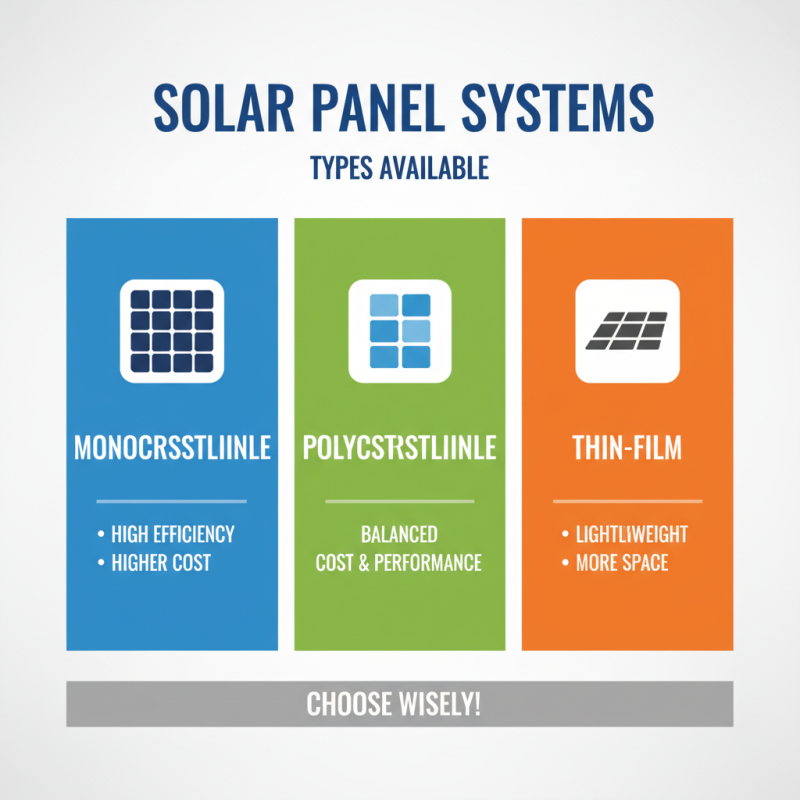
When choosing a solar panel system, it helps to understand the types available. There are three main options: monocrystalline, polycrystalline, and thin-film panels. Each type has distinct advantages and drawbacks. Monocrystalline panels are efficient but often more expensive. Polycrystalline offers a balance of cost and performance. Thin-film panels are lightweight, but they may require more space.
Consider your specific needs. Do you have ample roof space? Thin-film might work well for you. If efficiency is crucial, monocrystalline panels could be ideal. However, their higher cost might be a concern. Reflect on your budget and energy goals. Energy savings are significant, but initial investments can be daunting.
Not all solar systems fit every home. Local climate and sunlight exposure play key roles. In less sunny areas, performance may dip, negating savings. Installation quality matters too. Poor installation can lead to issues down the road. Be sure to evaluate these factors carefully before making a choice.
Assessing the Cost and Financing Options for Solar Installations
When considering a home solar system, one crucial factor is the cost.
A typical residential solar installation can range from $15,000 to $30,000 before incentives. According to the Solar Energy Industries Association, solar prices have dropped by about 70% over the past decade. This trend makes solar energy more accessible for homeowners. However, it’s essential to analyze installation costs versus long-term savings.
Tips:
Research local incentives. Many states offer tax credits. These can significantly reduce your upfront costs.
Financing options are vital. Many homeowners consider solar loans or leases. A solar loan allows you to own the system outright. In contrast, a lease means you pay for the system's use. It's crucial to evaluate the terms. Documented reports show that ownership can lead to increased property value. Assess data from your utility company on energy rates. Compare this with the potential savings from solar.
Tips:
Read the fine print. Understand your loan or lease’s interest rates. Hidden fees can affect your overall savings.
Considering Installation and Maintenance Requirements for Solar Systems
When selecting a home solar system, installation and maintenance are key factors. The installation process can vary greatly based on your home's layout. Some roofs may need structural reinforcements. Others might require special mounting systems. It's essential to assess your roof’s angle and shading. This involves checking nearby trees or buildings that could block sunlight. Each of these factors can impact energy production.
Maintenance is another critical area that requires attention. Regular cleanings can help maximize efficiency. Dust, dirt, and debris can accumulate on solar panels. They might block sunlight and reduce output. Visual inspections should be performed periodically to check for damage. Although solar systems are generally low-maintenance, some components like inverters may need replacement over time. Understanding these nuances will help ensure long-term performance and satisfaction.
Researching Local Regulations and Incentives for Solar Energy Systems
When considering a home solar system, understanding local regulations is crucial. Each state has its own rules, affecting installation and grid connections. For instance, some regions have strict zoning laws. Others may offer lenient permitting processes, promoting faster installations.
Incentives play a significant role in the affordability of solar systems. Many states provide tax credits or rebates for solar installations. According to the U.S. Department of Energy, the federal solar tax credit offers up to 26% off the total cost of a system. However, these incentives can vary significantly based on local policies.
Another aspect to consider is net metering. This allows homeowners to sell excess energy back to the grid. In some states, homeowners benefit from a 1:1 credit on their utility bill. Yet, not all regions support net metering. It is vital to investigate local utility policies to maximize your savings. Always check the latest regulations and incentives that can impact your solar investment.
How to Choose the Best Home Solar System for Your Needs?
| Criteria |
Description |
Local Regulations |
Incentives Available |
| System Size |
Determine the power needs based on energy consumption. |
Check for any installation size limits. |
State or local rebates based on system size. |
| Type of Panels |
Research different panel efficiencies and warranties. |
Check compliance with local building codes. |
Tax credits for certain types of technology. |
| Installation Costs |
Gather quotes from local contractors. |
Permit fees may apply in your area. |
Local or federal grants to offset costs. |
| Net Metering |
Understand how excess power is credited. |
Regulations vary by state on net metering policies. |
Benefits from selling excess energy back to the grid. |
| Maintenance Requirements |
Check on warranty details and upkeep recommendations. |
Ensure compliance with maintenance regulations. |
Incentives for regular maintenance checks. |