Unirac

2026 How to Choose the Best Solar Panels for Home Use

Choosing the right solar panels for home use can be overwhelming. The market offers numerous options. Each type presents unique advantages and drawbacks. Homeowners often face dilemmas when selecting the best fit. It is essential to consider various factors.

You should assess energy needs and budget first. Different solar panels vary in efficiency and cost. For instance, some panels work better in shaded areas while others generate more power in direct sunlight. Reading reviews can illuminate useful insights. Yet, market saturation can cloud judgment.

Remember, quality matters. Cheaper panels may seem appealing initially but could lead to greater costs over time. Longevity and performance are crucial aspects to think about. It’s important to reflect on personal energy goals. Ultimately, the choice of solar panels for home use must align with your specific requirements and lifestyle. Being clear about these priorities will help navigate the available options.
2026 How to Choose the Best Solar Panels for Home Use

Factors to Consider When Choosing Solar Panels for Home Use

When choosing solar panels for home use, several factors come into play. First, evaluate the efficiency of the panels. Higher efficiency means more energy from a smaller space. Consider the size of your roof too. A larger roof can accommodate bigger panels or more of them. Think about your energy needs. Calculate how much energy you consume monthly. This will guide you in selecting a suitable panel capacity.

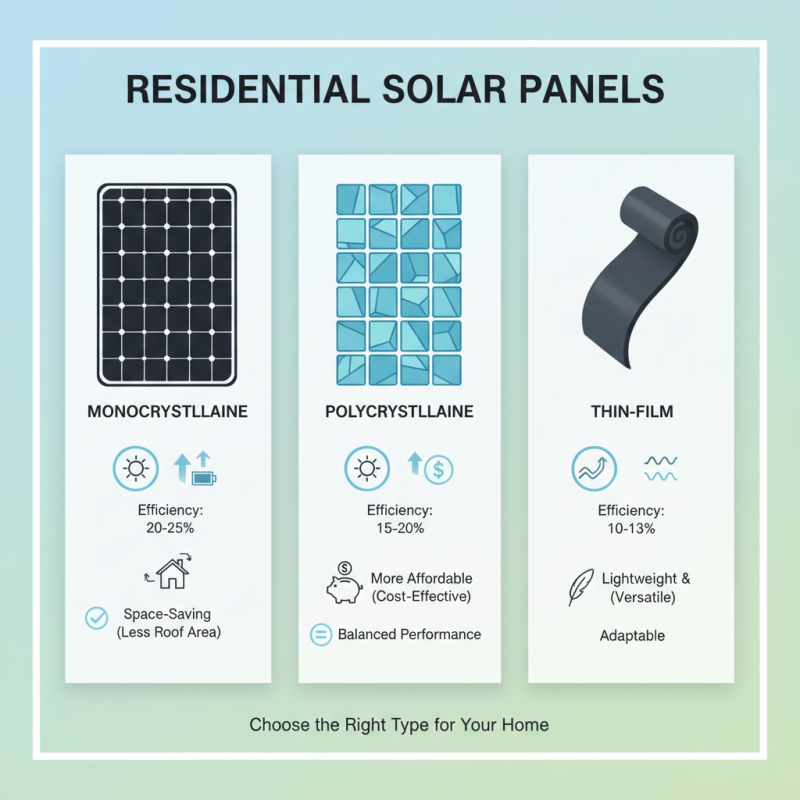
Next, pay attention to the type of solar panels. Monocrystalline, polycrystalline, and thin-film each have their characteristics. Monocrystalline panels are generally more efficient. However, they might be more expensive. Durability is another key factor. Look for panels with a good warranty. This indicates how long they are expected to last. A longer warranty can often signify better build quality.

It’s also wise to consider the installation process. Some panels are easier to install than others. If you plan to hire professionals, get multiple quotes. This can help you find a fair price for installation. Reflect on your local climate too. Areas with less sunlight may require different panels than sunny regions. Analyze these factors carefully to make an informed decision. Balancing your choices is crucial.

2026 How to Choose the Best Solar Panels for Home Use - Factors to Consider When Choosing Solar Panels for Home Use

Factor Description Importance
Efficiency How much sunlight the panel can convert into usable electricity. High
Temperature Coefficient The change in output efficiency given a rise in temperature. Medium
Warranty Period The duration for which the panel is guaranteed to perform. High
Price Cost per watt or total cost of the solar panel installation. High
Durability Resilience against environmental conditions and lifespan. Medium
Aesthetics Overall look of the solar panels and how they fit with your home. Low

Types of Solar Panels and Their Advantages for Residential Installation

2026 How to Choose the Best Solar Panels for Home Use

When considering solar panels for residential use, understanding the different types is crucial. The three main types are monocrystalline, polycrystalline, and thin-film. Monocrystalline panels, known for their efficiency, convert about 20-25% of sunlight into energy. They occupy less space, making them ideal for homes with limited roof area. Polycrystalline panels are less efficient, typically converting 15-20% of solar energy, but they are often more affordable. Thin-film panels hold the lowest efficiency level, around 10-13%, but are lightweight and flexible.

Each type has distinct advantages. For example, monocrystalline panels perform better in low-light conditions, which is vital during winter months. In contrast, polycrystalline panels are a cost-effective choice for larger rooftops, where space is not a constraint. Thin-film panels may be a suitable alternative for unique installations, despite their lower efficiency. According to the National Renewable Energy Laboratory, optimizing your choice based on your location and roof specifications can lead to greater energy savings over time.

Nevertheless, potential buyers should be cautious. Efficiency does not always correlate with cost-effectiveness. Some homes may not require the highest efficiency products. Over-investing in high-efficiency panels without considering household energy needs can lead to wasted resources. Furthermore, it is essential to evaluate local incentives, which can greatly impact the overall cost-benefit ratio of your solar installation.

Evaluating Efficiency Ratings and Performance Metrics of Solar Panels

2026 How to Choose the Best Solar Panels for Home Use

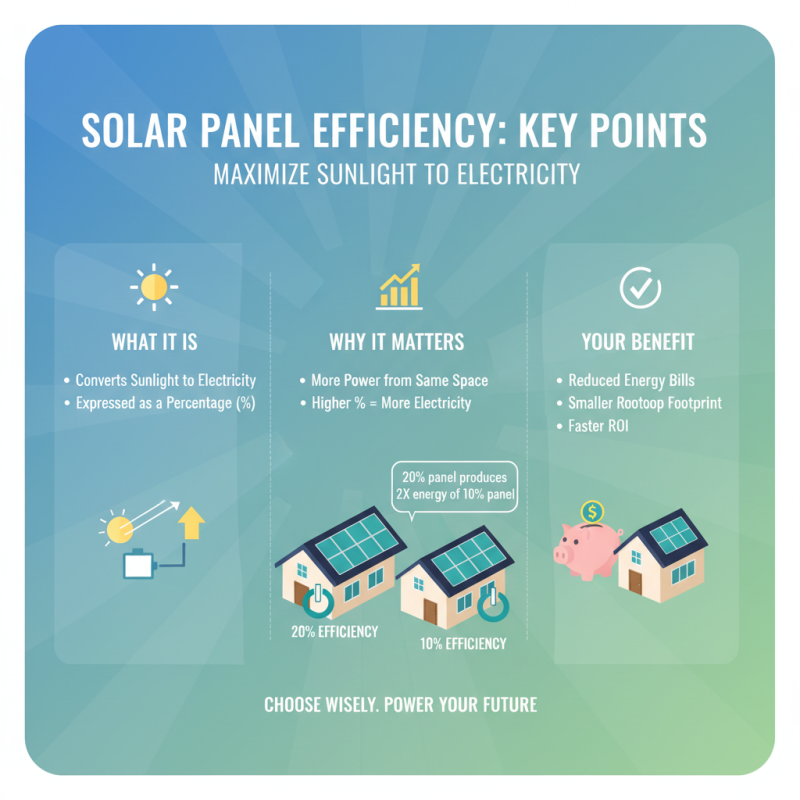
When selecting solar panels, understanding efficiency ratings is crucial. Efficiency indicates how well a panel converts sunlight into electricity. It's expressed as a percentage. Higher efficiency means more electricity generation in smaller spaces. For example, a panel with 20% efficiency will produce twice the energy of one with 10%, given the same sunlight exposure.

Performance metrics provide insights beyond efficiency. Consider temperature coefficient and energy production ratings. A lower temperature coefficient indicates better performance in hot conditions. Energy production ratings show how much energy you can expect annually. For instance, some panels may perform well in ideal conditions but underperform in real-world scenarios.

Assessing these metrics can be complex. Some may focus solely on efficiency, overlooking other factors. This might lead to purchasing a panel that doesn’t suit local weather conditions. Additionally, understanding performance warranties can be challenging. Many consumers struggle to interpret terms used in contracts. You may need to ask questions to ensure you choose panels that meet your needs effectively.

Understanding Warranty and Lifespan of Solar Panels for Long-Term Use

When selecting solar panels for home use, understanding warranty and lifespan is crucial. Most panels come with a warranty ranging from 10 to 25 years. A longer warranty often indicates better quality. However, it's essential to assess what the warranty covers. Some warranties might not include performance degradation. Pay attention to how performance is measured over the years.

Lifespan is another vital aspect to consider. Most solar panels last 25 to 30 years. As they age, efficiency may decline. Some panels may lose up to 20% of their efficiency in 25 years. Regular maintenance can help prolong their lifespan. Monitoring performance annually is a smart practice.

Choosing solar panels involves weighing these details. A longer warranty may bring peace of mind. Yet, consider potential degradation and your local climate. Not every home is suitable for solar energy. Factors like shading and roof angle should be evaluated. It’s not a one-size-fits-all solution. Always reflect on these elements before making a decision.

Comparing Costs and Financial Incentives for Residential Solar Panel Systems

When considering residential solar panel systems, understanding costs is crucial. The initial investment often seems daunting. Your expenses could vary widely based on panel types and installation costs. Research shows that average prices for systems differ significantly from one region to another. The hidden costs, such as permits and maintenance, can add up. It's not just about the upfront price.

Financial incentives play a pivotal role. Many homeowners can benefit from local, state, and federal programs. Tax credits might reduce your total expense significantly. Some areas offer rebates, making solar more affordable. Keep in mind, though, that these incentives can change annually. What applies this year may not apply next year. Always check for updates before making a decision.

The return on investment (ROI) also deserves attention. Some homeowners experience long payback periods. It could take a decade or more to see full savings. Analyze your energy needs carefully. A system that's too large means higher initial costs without proportionate savings. Reflecting on your home’s energy efficiency might save you money in the long run. Choosing the right system requires thoughtful consideration of all these factors.