Unirac

10 Tips for Choosing Solar Panels for Business?

Choosing solar panels for business is a financial and operational decision, not merely a sustainability statement. A warehouse roof, retail building, or office campus may look suitable, yet shading, roof age, electricity demand, and local grid rules can change the outcome. The wrong panel may produce less energy than expected. It may also create maintenance costs that were missed during planning.

Amory Lovins, energy expert and co-founder of RMI, has said, “The cheapest energy is the energy you don’t use.” That principle belongs at the center of every commercial solar review. Before comparing panel brands, businesses should examine lighting schedules, heating systems, production equipment, and unused rooftop space. Lowering waste can reduce the number of panels required. It can also improve the project’s payback period.

Real conditions matter.

This guide, “10 Tips for Choosing Solar Panels for Business,” explores efficiency ratings, temperature performance, warranties, degradation rates, installation quality, monitoring tools, and financing considerations. It also explains why a panel with the highest laboratory efficiency may not be the best choice for every property. For example, a dusty manufacturing site may need easier cleaning access, while a coastal building may require stronger corrosion protection. Product datasheets help, but they do not replace a site assessment.

Some decisions remain imperfect. Energy prices can shift. Roof repairs may appear later. Incentive programs may change. Reliable planning therefore requires documented assumptions, qualified installers, independent reviews, and realistic production estimates. A careful buyer should ask difficult questions before signing anything. That caution protects both cash flow and long-term energy goals.
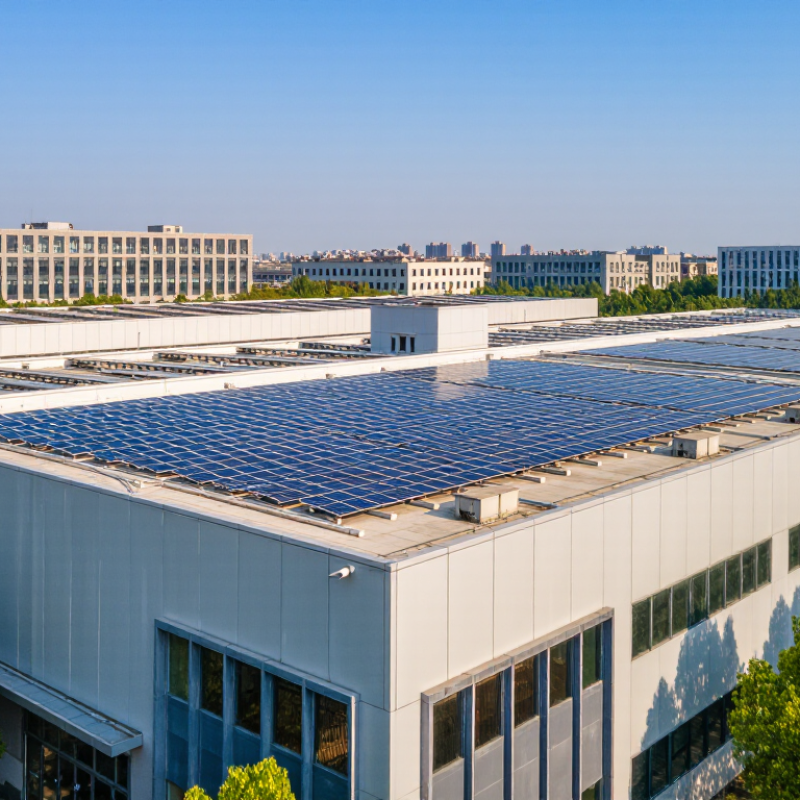
10 Tips for Choosing Solar Panels for Business?

Assess Your Business’s Energy Needs and Solar Goals

Before comparing solar panels, measure how your business actually uses electricity. Collect at least twelve months of utility bills, including demand charges and seasonal changes. Monthly totals can hide important patterns. A bakery may peak before dawn, while an office may consume most power after sunrise.

Walk through the facility with a qualified energy professional. Record major equipment, operating hours, roof condition, shading, and available installation space. Interval meter data can reveal short demand spikes that ordinary bills miss. Early estimates are often wrong. I have seen businesses overstate their solar needs because one unusually hot month shaped their expectations.

Define the solar goal in practical terms. Lowering annual costs, protecting against outages, reducing emissions, or supporting future expansion may require different system designs. A business seeking resilience may need battery storage, while a daytime operation might benefit from direct solar generation. Compare expected production with your load profile, not with a generic online estimate. Review degradation assumptions, maintenance access, financing terms, and utility interconnection requirements with qualified advisers. Leave room for growth. That detail is easy to overlook. Recheck the plan after efficiency upgrades, equipment replacements, or changes in operating hours. A smaller system installed after reducing waste can sometimes serve the business more reliably than a larger system built on uncertain assumptions.
Compare Solar Panel Types, Efficiency, and Performance

Choosing Solar Panels for Business: Compare Type, Efficiency, and Performance

Start with the panel type, not the advertised wattage. The IEA PVPS Trends 2024 report states that crystalline-silicon technology represents more than 95% of global module production. Monocrystalline panels usually deliver strong efficiency in limited roof space. Polycrystalline panels can cost less, but their lower efficiency may require more area. Thin-film modules perform better in some heat and low-light conditions. They usually need more installation space.

Efficiency matters, but it is only one measurement. Fraunhofer ISE’s Photovoltaics Report 2024 places leading commercial silicon modules near 22–24% efficiency. NREL’s research-cell chart records higher laboratory results, above 26% for crystalline silicon. Those laboratory figures are not normal business installations. Check temperature coefficient, degradation rate, mechanical load, and warranty terms. A panel producing well at 25°C may lose output on a hot warehouse roof.

Performance depends on the site. A shaded roof may favor module-level power electronics, while a large, unshaded roof can prioritize lower cost per watt. Review annual energy simulations using local weather data, roof orientation, and inverter limits. I would not choose the highest-efficiency panel automatically. That can be an expensive mistake when roof structure, cleaning access, or installation labor dominates the budget. Site-specific measurements are imperfect, but vague estimates are worse.

10 Tips for Choosing Solar Panels for Business? - Compare Solar Panel Types, Efficiency, and Performance

Tip Evaluation Dimension What to Compare Typical Data or Range Business Performance Impact Recommended Selection Approach
1 Panel Technology Compare monocrystalline, polycrystalline, and thin-film modules. Monocrystalline modules commonly achieve approximately 19%–23% efficiency. Polycrystalline modules are commonly around 16%–19%, while thin-film efficiency often ranges from approximately 10%–13%, depending on the technology. Higher-efficiency panels can produce more electricity from a limited commercial roof area. Choose high-efficiency monocrystalline panels when roof space is limited. Consider thin-film where the roof is large, lightweight, or has unusual surfaces.
2 Rated Power Review the nameplate power rating under standard test conditions. Many current commercial modules are rated from approximately 400 W to 600 W per panel, although the available range varies by physical size and product design. Higher wattage can reduce the number of panels, mounting points, cables, and labor required for a target system size. Compare wattage together with panel dimensions. A higher wattage panel is not automatically better if it uses significantly more roof space.
3 Temperature Performance Check the temperature coefficient of power. Commercial crystalline-silicon modules often have a power temperature coefficient of approximately −0.25% to −0.40% per °C above the rated cell temperature. Panels with a less negative coefficient generally lose less output during hot weather, which can improve annual production in warm climates. Give greater weight to temperature performance in hot regions or on roofs with limited airflow. Compare values on the same test basis.
4 Degradation Rate Compare the expected annual decline in power output. Many modern modules specify first-year degradation of approximately 1%–2%, followed by around 0.3%–0.5% per year, depending on the product and warranty terms. A lower degradation rate helps preserve energy production and operating savings over a long commercial project life. Review both the first-year loss and the subsequent annual degradation rate instead of relying only on the final-year warranty percentage.
5 Durability and Environmental Ratings Assess resistance to wind, snow, hail, humidity, salt mist, and potential-induced degradation. Load ratings vary by model and mounting method. Hail, salt-mist, ammonia, and corrosion testing may be relevant for specific locations and operating environments. Durable modules can reduce failure risk, maintenance interruptions, and replacement costs. Match the panel certifications and load ratings to the building location, roof structure, local weather, and industrial conditions.
6 Low-Light and Shading Behavior Examine performance during cloudy conditions, early morning, late afternoon, and partial shading. Actual output depends on irradiance, orientation, shading, temperature, inverter design, and system losses. No panel produces its rated power continuously. Better system behavior under non-ideal conditions can increase annual yield on urban roofs or sites with nearby buildings and equipment. Use module-level power electronics or an appropriate string design when shading is unavoidable. Reduce shading before paying a premium for panel specifications.
7 Roof Space and Layout Compare panel dimensions, weight, clearances, roof obstacles, and usable area. Typical commercial modules often measure roughly 1.7–2.4 m² and may weigh approximately 20–35 kg, but exact dimensions vary widely. Physical compatibility affects the achievable system size, structural requirements, installation time, and maintenance access. Complete a roof survey before selecting modules. Reserve space for walkways, fire access, drainage, skylights, HVAC equipment, and future maintenance.
8 Warranty and Serviceability Review product warranty, performance warranty, exclusions, claim procedures, and expected service support. Product warranties commonly cover approximately 10–25 years, while performance warranties commonly extend to about 25–30 years, depending on the module. Clear warranty coverage can reduce long-term financial risk and simplify decisions if output or equipment reliability declines. Read the complete warranty document, including labor exclusions, transfer conditions, shipping responsibilities, and performance measurement requirements.
9 System Compatibility Confirm electrical compatibility with inverters, optimizers, mounting systems, and existing equipment. Check maximum system voltage, operating voltage, current, connector type, temperature limits, and inverter input specifications. Compatible components improve safety, reduce design changes, and help the system operate close to its intended output. Have a qualified solar designer verify the complete electrical design rather than selecting panels independently from the rest of the system.
10 Total Cost of Ownership Compare purchase price, installation, energy yield, maintenance, replacement risk, financing, and incentives. Panel price alone does not represent total project cost. Annual energy yield should be estimated using local solar resource, orientation, tilt, shading, temperature, and system losses. The lowest purchase price may not deliver the lowest cost per kilowatt-hour or the best return on investment. Compare proposals using lifecycle cost, expected annual production, payback period, net present value, and sensitivity to electricity prices.

Note: Performance ranges are general industry reference values. Actual results depend on module design, installation quality, climate, roof conditions, system configuration, shading, and operating practices.

Evaluate Roof Space, Site Conditions, and Installation Options

Choosing solar panels for business starts with the roof, not the product brochure. Measure usable roof space around vents, skylights, drains, and fire-access paths. IEA PVPS reported that global solar capacity exceeded 1,400 gigawatts by the end of 2023, increasing installation experience worldwide. Yet a crowded roof can still produce disappointing results. Shade from a taller building may move across panels at 9 a.m. and 3 p.m. Test both times.

Site conditions deserve a physical inspection. Check roof age, membrane condition, wind exposure, drainage, and structural loading. A qualified engineer should confirm whether the roof can carry panels, racking, ballast, and maintenance loads. NREL’s PVWatts tool estimates production using local weather and system assumptions, but its output is not a guarantee. Dust, snow, heat, and shading can reduce actual generation. I once saw a promising layout lose several panel rows after a rooftop unit was measured incorrectly.

Installation options also change project value. Rooftop systems may preserve parking areas, while carports can provide shade and electric-vehicle readiness. Ground-mounted arrays need more land, grading, security, and permitting. Compare fixed-tilt and adjustable designs using hourly production, not annual totals alone. IEA PVPS and NREL guidance both support site-specific yield analysis and documented maintenance planning. Do not overlook access routes. Panels that look efficient on paper may be difficult to clean, inspect, or replace. That weakness matters.

10 Tips for Choosing Solar Panels for Business

Evaluate roof space, site conditions, and installation options before selecting a commercial solar system.

These planning ranges are commonly used for early commercial PV screening. Confirm roof structure, shading, fire access, electrical capacity, local solar resource, permits, warranties, and installation methods through a site-specific engineering assessment. Usable roof area is usually lower than the total roof area because of setbacks, access paths, equipment, and shading.

Review Costs, Incentives, Warranties, and Financing Choices

When choosing solar panels for a business, review the full cost, not only the panel price. Request an itemized quote covering equipment, design, permits, labor, roof repairs, monitoring, and grid connection. A low bid may exclude necessary electrical work. Ask how production estimates were calculated. Request monthly figures, not just an annual total.

Incentives can change the project economics. Check current national, regional, and utility programs through official government or utility websites. Confirm eligibility before signing a contract. Some incentives depend on installation dates, business structure, energy use, or equipment standards. Keep written records. Rules can change. Test the payback calculation under lower-than-expected sunlight. That uncomfortable scenario is useful.

Warranties deserve close reading. Compare product coverage with workmanship coverage, exclusions, claim procedures, and response times. Ask who handles repairs if an installer stops operating. Financing needs the same care. Compare cash purchases, loans, leases, and power-purchase agreements by total cost, not monthly payment. Review interest, escalation clauses, early-payment terms, maintenance duties, and roof removal costs. A five-year forecast can look polished yet remain fragile. Have an accountant and an independent energy professional review the numbers. Their fees may prevent expensive assumptions.

Select a Qualified Installer and Plan for Long-Term Maintenance

Choosing solar panels for a business is not only a product decision. The installer often determines safety, output, and future repair costs. Look for licensed electricians, documented commercial projects, and current insurance. Ask who will perform the work, not only who signs the contract. A qualified team should inspect roof structure, shade patterns, electrical capacity, and fire access before recommending equipment. Good advice may reduce the panel count. That can be a strength.

Tip 1

Request a written design and maintenance plan. It should show expected annual production, cleaning needs, inspection dates, inverter access, and response times for faults. Compare workmanship warranties with equipment warranties. They cover different risks. Ask for references from businesses with similar roof types and operating hours. Speak with those owners about delays, communication, and actual energy results. Sales promises are not evidence.

Tip 2

Plan maintenance before installation. Schedule visual checks after severe weather, electrical testing at suitable intervals, and safe cleaning when dust or bird deposits reduce output. Keep monitoring login details, drawings, serial records, and service contacts in one secure file. A small access problem can become a costly shutdown. I once underestimated how quickly rooftop dust affected production; the lesson was simple: inspect data, not assumptions. Review the contract annually, because staffing, roof use, and energy demand can change.