
Top Solar Energy Installation Companies for Your Business?
Choosing among the top solar energy installation companies requires more than comparing headline prices. A commercial system affects operating costs, roof integrity, insurance, and future expansion. The International Energy Agency reported that global solar photovoltaic additions approached 420 gigawatts in 2023, representing most new renewable capacity. That growth creates opportunity, but it also makes supplier quality harder to judge.
A credible installer should explain production estimates, equipment warranties, interconnection steps, and maintenance responsibilities in clear language. Ask for project references with similar roof types, electricity loads, and local weather conditions. A warehouse with shaded skylights needs a different design from a retail building with a flat roof. NREL’s Annual Technology Baseline shows that solar costs and performance vary by location, financing structure, and system assumptions. Therefore, one company’s attractive payback period may not apply to your business.
Look for licensed professionals, transparent contracts, documented safety procedures, and independent performance guarantees. IRENA’s Renewable Capacity Statistics 2024 recorded strong global renewable expansion, yet rapid market growth does not guarantee careful workmanship. It is not enough. The cheapest proposal may exclude structural repairs, monitoring, or transformer upgrades. Those omissions can surface after installation, when changing vendors becomes expensive. Experienced buyers should compare total lifetime value, not only the installation invoice. Even this approach has limits: forecasts depend on electricity prices, weather, policy incentives, and building conditions. A thoughtful shortlist combines verified credentials, conservative estimates, responsive service, and evidence from completed commercial projects. That is where confidence begins.
What Defines a Top Solar Energy Installation Company?
What Defines a Top Solar Energy Installation Company?
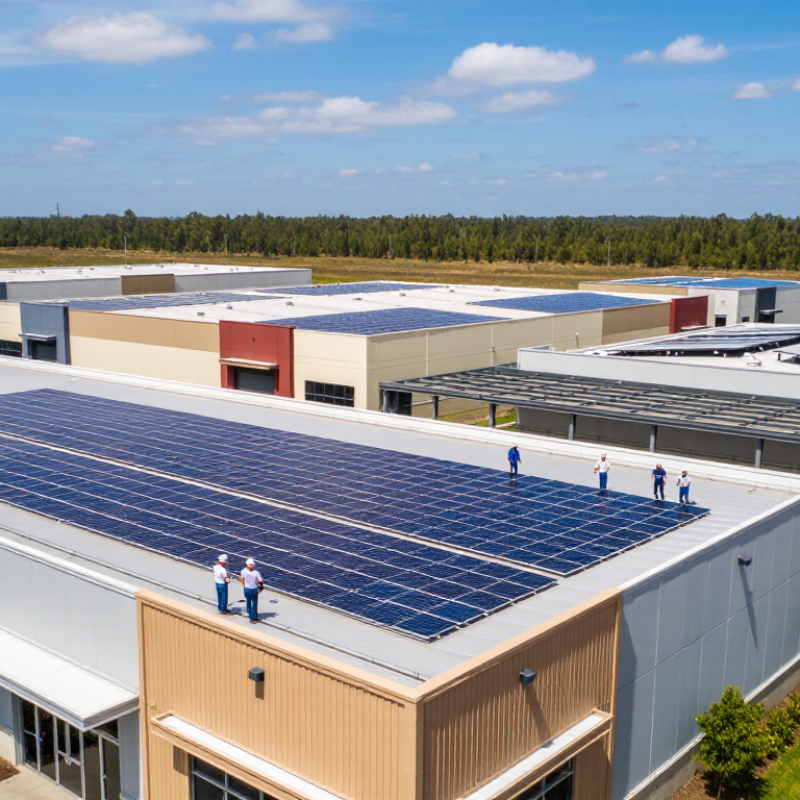
A top solar energy installation company begins with a careful site assessment. Its team studies roof age, shading, drainage, structural strength, and local weather patterns. A quick quote is not enough. Experienced installers explain how these details affect energy production and maintenance costs. They also inspect electrical panels before recommending equipment. That practical step can prevent expensive surprises later.
Professional expertise appears in the design documents. The company should provide clear production estimates, system layouts, permit plans, and safety procedures. Its engineers must understand grid requirements and local building standards. Ask how forecasts were calculated. No forecast is perfect. Honest professionals show assumptions instead of promising unrealistic savings. They also use qualified electricians and maintain current licenses, insurance, and training records.
Reliability continues after installation. A strong provider offers realistic workmanship coverage, responsive service, and clear maintenance terms. Customers should receive monitoring access, operating guidance, and records of completed inspections. Speak with recent commercial clients when possible. Their comments may reveal slow repairs or confusing invoices. That matters. A polished sales meeting cannot replace dependable support. Even excellent companies can make mistakes, but they should document them, correct them promptly, and explain what changed. Clear communication often separates a trustworthy installer from a merely persuasive one.
| Evaluation Dimension | Strong Industry Benchmark | Why It Matters for a Business | Evidence to Request |
|---|---|---|---|
| Commercial Experience |
Proven capability A portfolio covering projects comparable in size, roof type, electrical configuration, and operating environment. |
Commercial systems often involve larger loads, more complex interconnection requirements, structural reviews, and coordination with facility operations. | Completed-project list, customer references, project photographs, and examples of systems with similar capacity and site conditions. |
| System Design Quality |
Site-specific design A proposal based on energy usage, roof geometry, shading, local climate, electrical demand, and future expansion plans. |
Accurate design improves expected generation, reduces avoidable production losses, and helps prevent costly redesigns during construction. | Site assessment, production model, layout drawings, single-line diagram, structural review, and clearly stated design assumptions. |
| Energy Yield Forecasting |
Transparent estimates Annual generation forecasts that account for orientation, tilt, shading, temperature, system losses, and degradation. |
Reliable forecasts support budgeting, payback analysis, energy planning, and evaluation of electricity-cost savings. | Monthly production estimates, loss assumptions, degradation assumptions, and a clear explanation of the modeling method used. |
| Permitting and Interconnection |
End-to-end coordination Management of local permits, utility applications, inspections, and permission-to-operate requirements. |
Delays in approvals or utility interconnection can postpone commissioning and reduce the financial value of the project. | Written scope of responsibility, permitting timeline, utility-interconnection process, inspection plan, and escalation procedure. |
| Safety and Compliance |
Documented controls Compliance with applicable electrical, building, fire, fall-protection, and occupational-safety requirements. |
Strong safety practices protect employees, contractors, facilities, and business continuity while reducing legal and operational risk. | Licenses, insurance certificates, safety program, training records, inspection documentation, and relevant compliance credentials. |
| Equipment and Component Selection |
Bankable components Equipment selected for the site’s climate, electrical requirements, maintenance strategy, and expected service life. |
Appropriate components can improve reliability, serviceability, energy production, and long-term operating performance. | Equipment specifications, product certifications, warranty terms, compatibility information, and documented availability of replacement parts. |
| Workmanship and Installation Process |
Controlled execution A documented construction plan covering scheduling, site access, roof protection, quality checks, testing, and cleanup. |
A well-managed installation minimizes disruption to employees, customers, tenants, production areas, and business operations. | Project schedule, site logistics plan, quality-assurance checklist, commissioning procedure, and change-order policy. |
| Performance Monitoring |
Ongoing visibility Online monitoring that reports system production, equipment status, alerts, and historical performance. |
Timely visibility helps identify faults, quantify energy output, and confirm whether the system is meeting its modeled expectations. | Monitoring-system demonstration, alert settings, user-access details, reporting frequency, and data-retention policy. |
| Warranty and Service Support |
Clear accountability Separate documentation for equipment warranties, installation workmanship, service response, and performance commitments. |
Clearly assigned responsibilities reduce uncertainty when a component fails or system performance falls below expectations. | Complete warranty documents, exclusions, claim process, service-level commitments, maintenance options, and local support contacts. |
| Financial Transparency |
Comparable pricing A detailed proposal showing equipment, labor, permitting, interconnection, taxes, incentives, maintenance, and optional items. |
Itemized pricing makes it easier to compare bids, identify hidden costs, and evaluate the project’s total cost of ownership. | Itemized quotation, payment schedule, assumptions, exclusions, escalation clauses, change-order rates, and financing terms where applicable. |
| Project Economics |
Scenario-based analysis Financial modeling that considers electricity rates, demand charges where applicable, incentives, taxes, financing, and degradation. |
A realistic analysis helps management compare solar with other capital investments and understand cash flow under different conditions. | Cash-flow model, sensitivity analysis, assumptions for electricity-price changes, incentive eligibility, and clearly stated payback methodology. |
| Roof and Structural Considerations |
Asset protection Evaluation of roof condition, remaining service life, structural capacity, waterproofing, and access requirements before installation. |
Addressing roof and structural issues early helps avoid leaks, premature removal, construction interruptions, and unexpected replacement costs. | Roof assessment, structural calculations, attachment details, waterproofing plan, roof warranty coordination, and replacement contingencies. |
| Environmental and Operational Fit |
Business-compatible planning Design and construction adapted to weather exposure, operating hours, emergency access, tenant needs, and critical business activities. |
A suitable project design protects operational continuity and ensures the solar installation supports rather than interferes with the business. | Construction-impact assessment, outage plan, access and egress drawings, weather-risk plan, and communication schedule for stakeholders. |
Related Posts
-
7 Best Solar Power Installation Tips for Global Buyers?
-
What Are the Benefits of Solar System Installation?
-

How to Choose the Right Solar Energy Installation Supplier
-

How to Choose the Best Solar System Installation for Your Home?
-
Top 10 Solar Equipment You Need for Your Business?
-
2026 Best Home Solar System Options for Global Buyers?